

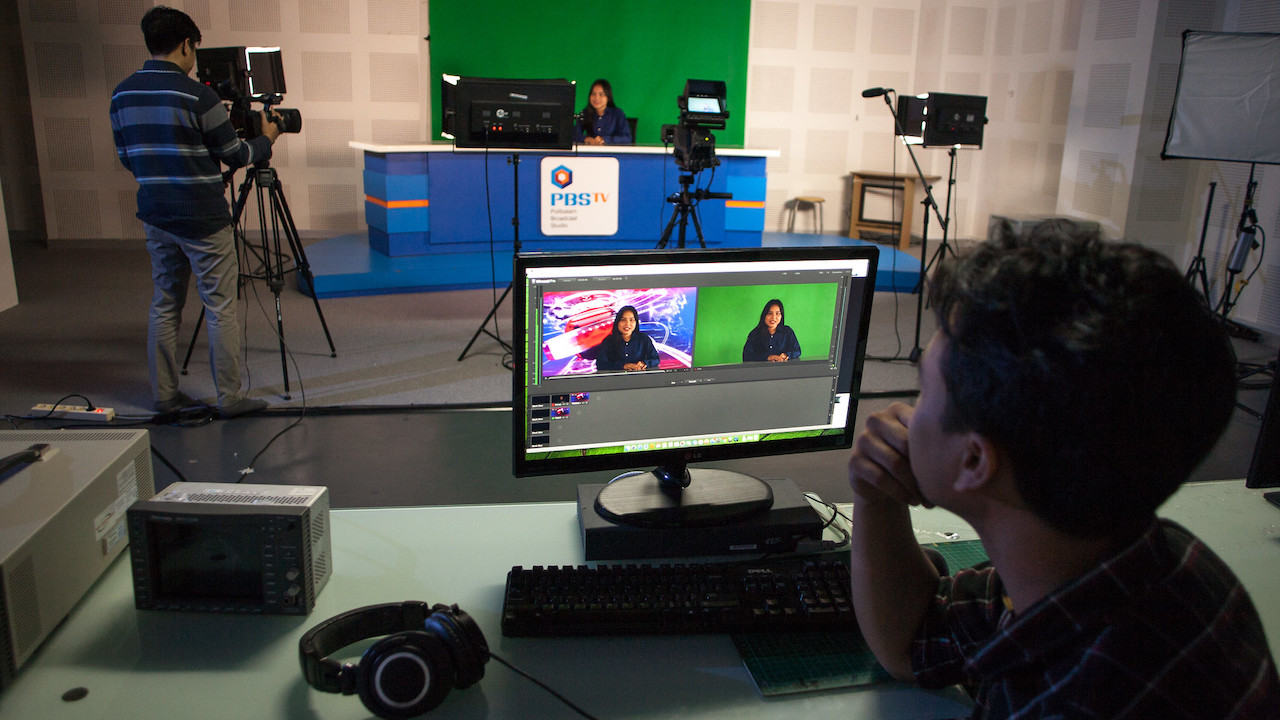
When you’re watching a live news broadcast, a championship game, or an emergency weather update, the captions appearing on your screen are often being created in real time—not generated after the fact.
Behind those captions is a highly trained professional known as a broadcast captioner.
Broadcast captioners help make live television accessible by converting spoken words into accurate, readable captions within seconds. Their work supports viewers who are deaf or hard of hearing, people watching in noisy environments, language learners, and anyone who prefers to follow along with on-screen text.
Although this career is rarely in the spotlight, it plays an important role in modern broadcasting. It combines language skills, technology, attention to detail, and the ability to perform under pressure.
If you’re curious about what broadcast captioners do, how to become one, and whether it’s the right career for you, this guide covers everything you need to know.
What Is a Broadcast Captioner?
A broadcast captioner is a professional who creates live captions for television programs and streamed broadcasts.
Unlike subtitles, which are added after a video has been edited, broadcast captions are produced while the event is happening. This requires exceptional speed, accuracy, and concentration.
Broadcast captioners may work on:
- Live news programs
- Sports broadcasts
- Political debates
- Award ceremonies
- Breaking news coverage
- Community events
- Educational programming
- Public safety announcements
Because live broadcasts move quickly, captioners must keep pace with conversations as they happen.
Why Broadcast Captioning Matters
Live captions are much more than a convenience.
For many people, they provide equal access to information and entertainment.
Broadcast captioning helps:
- People who are deaf or hard of hearing
- Viewers in noisy public places
- People learning English
- Viewers watching without sound
- Anyone who benefits from reading along
Captions become especially valuable during emergencies, severe weather, or major public announcements, when receiving accurate information quickly is essential.
By creating reliable captions, broadcast captioners help make media more inclusive and accessible.
What Does a Broadcast Captioner Do Every Day?
No two broadcasts are exactly alike, but most broadcast captioners follow a similar workflow.
Preparing Before a Broadcast
Preparation begins well before the cameras start rolling.
Captioners often review:
- Guest names
- Company names
- Technical terminology
- Sports rosters
- Place names
- Current events
- Industry-specific vocabulary
Many also update custom dictionaries so uncommon words appear correctly during the live broadcast.
Good preparation reduces errors and improves overall accuracy.
Creating Live Captions
During the broadcast, the captioner listens through a headset while using specialized equipment to capture spoken words.
This work requires continuous concentration because speakers may:
- Talk very quickly
- Interrupt one another
- Change subjects suddenly
- Use unfamiliar names
- Speak with different accents
Despite these challenges, captions must remain accurate, readable, and synchronized with the conversation as closely as possible.
Reviewing Performance
After completing a broadcast, many professionals review their work to identify opportunities for improvement.
This might include:
- Correcting dictionary entries
- Adding new terminology
- Improving writing speed
- Practicing difficult vocabulary
- Refining caption formatting
Continuous learning is a normal part of the profession.
What Skills Does a Broadcast Captioner Need?
Success in this career depends on much more than typing speed.
Excellent Listening Skills
Captioners must understand different speaking styles, accents, and rapid conversations while maintaining focus for extended periods.
Strong Language Skills
Grammar, punctuation, spelling, and sentence structure all contribute to clear, readable captions.
Speed and Accuracy
Realtime captioning demands fast writing with minimal mistakes.
Consistency is often more valuable than raw speed alone.
Attention to Detail
Small mistakes can change the meaning of a sentence.
Professional captioners learn to recognize and correct errors quickly.
Technical Confidence
Modern captioners work with captioning software, audio equipment, dictionaries, and broadcasting systems.
Being comfortable with technology is an important part of the job.
Time Management
Broadcast schedules are fixed.
Professionals need to prepare thoroughly and be ready when every program begins.
What Equipment Does a Broadcast Captioner Use?
While every employer has different workflows, many broadcast captioners use:
- A stenotype machine
- Professional captioning software
- A reliable computer
- Noise-isolating headphones
- High-speed internet connection
- Backup power and internet options
Reliable equipment helps minimize interruptions during live broadcasts.
Broadcast Captioner vs. Court Reporter
Although these professions share similar skills, they have different responsibilities.
| Broadcast Captioner | Court Reporter |
|---|---|
| Creates live TV captions | Creates official legal transcripts |
| Works with broadcasters | Works with courts and legal professionals |
| Focuses on accessibility | Focuses on legal documentation |
| Captions live events | Records courtroom proceedings |
Many professionals begin in court reporting before moving into broadcast captioning because both careers require strong realtime writing skills.
How to Become a Broadcast Captioner
There isn’t one universal path, but most professionals follow these steps.
1. Learn Stenography
Many broadcast captioners begin by studying stenography through a recognized training program.
Learning the stenotype keyboard takes dedication and consistent practice.
2. Develop Realtime Writing Skills
Live captioning requires writing at very high speeds while maintaining excellent accuracy.
Daily practice is essential.
3. Learn Captioning Software
Modern captioning relies on specialized software that converts shorthand into readable captions.
Understanding these tools is just as important as writing speed.
4. Gain Practical Experience
Some professionals gain experience through:
- Court reporting
- CART captioning
- Freelance captioning
- Internship opportunities
- Educational captioning
Each role helps build confidence and realtime skills.
5. Continue Improving
Language evolves constantly.
Successful captioners regularly add new names, terminology, and current events to their dictionaries.
Professional growth never really stops.
Where Do Broadcast Captioners Work?
Broadcast captioners work in a variety of settings.
Some are employed by:
- Television networks
- Captioning companies
- Media organizations
- Government agencies
- Educational institutions
Others work independently as freelancers or remote contractors.
Remote work has become increasingly common, although reliable technology and a quiet workspace are essential.
Is Broadcast Captioning a Good Career?
For people who enjoy language, technology, and problem-solving, broadcast captioning can be both challenging and rewarding.
Some of the benefits include:
- Meaningful work that improves accessibility
- Opportunities to work remotely
- Variety in daily assignments
- Continuous learning
- Specialized professional skills
Like many careers, it also comes with challenges.
Deadlines are strict, live broadcasts are unpredictable, and accuracy matters.
People who enjoy fast-paced environments often find the work engaging and fulfilling.
Common Challenges
Even experienced captioners encounter obstacles.
These may include:
- Fast speakers
- Multiple people talking simultaneously
- Unexpected breaking news
- Technical terminology
- Audio quality issues
- Tight production schedules
Preparation and experience help professionals handle these situations more effectively.
Career Growth Opportunities
Broadcast captioning can open the door to related careers, including:
- CART captioning
- Court reporting
- Educational captioning
- Conference captioning
- Accessibility consulting
- Transcription services
- Caption quality management
Developing expertise in realtime communication can create opportunities across several industries.
Frequently Asked Questions
What is a broadcast captioner?
A broadcast captioner creates live captions for television programs, sports events, news broadcasts, and other live productions using specialized equipment and captioning software.
Do broadcast captioners work from home?
Many do. Remote work is common in the industry, provided professionals have reliable equipment, a stable internet connection, and a suitable workspace.
Is broadcast captioning difficult?
It can be challenging because it requires speed, concentration, technical knowledge, and excellent language skills. However, these abilities improve with training and experience.
What is the difference between captions and subtitles?
Captions include spoken dialogue and relevant audio information, while subtitles typically translate dialogue for viewers who can hear the audio but speak a different language.
Is a college degree required?
Requirements vary by employer. Many professionals complete specialized stenography or court reporting training rather than following a traditional four-year degree path.
Final Thoughts
Broadcast captioners help millions of people access live television every day, often without viewers realizing the expertise involved.
The profession combines communication, technology, and accessibility in a unique way. It rewards preparation, accuracy, and continuous learning while giving professionals the opportunity to contribute to a more inclusive media landscape.
If you’re interested in a career that values precision, adaptability, and lifelong learning, broadcast captioning is well worth exploring.